Understanding Skin Grafts and Flap Surgery
Skin grafts and flaps are essential reconstructive techniques for covering wounds and defects. Dr. Prasanna Somvanshi explains the types, indications, and healing process.
Dr. Prasanna Somvanshi
MCh Plastic Surgery, Mumbai
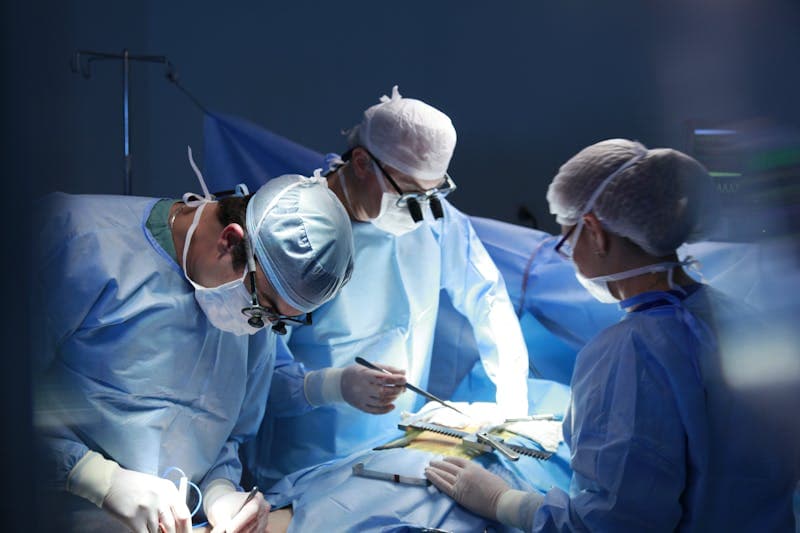
Understanding Skin Grafts and Flap Surgery
When the body sustains significant tissue loss from trauma, burns, cancer excision, or infection, the resulting wound may be too large to close by simply bringing the edges together. In these situations, plastic surgeons use skin grafts and flaps to cover the defect, protect underlying structures, and restore both function and appearance. Dr. Prasanna Somvanshi, a specialist plastic and reconstructive surgeon in Mumbai, performs these procedures at six leading hospitals including NH SRCC, SevenHills, Surya Hospital, HN Reliance, MRR Hospital, and Sushrusha Hospital.
Skin Grafts
A skin graft involves harvesting skin from one area of the body (the donor site) and transplanting it to the wound site (the recipient site). The transplanted skin survives by absorbing nutrients from the wound bed initially and then developing its own blood supply over the first few days.
Split-Thickness Skin Grafts (STSG)
A split-thickness graft includes the epidermis (outer skin layer) and a portion of the dermis (deeper skin layer). These grafts are harvested using a dermatome, a specialised surgical instrument that cuts a uniform thin layer of skin. Key characteristics include:
- Donor site: Commonly the thigh, buttock, or upper arm. The donor site heals on its own within two to three weeks as the remaining dermis regenerates new skin
- Advantages: Can cover large areas, donor site heals spontaneously, can be meshed (expanded) to cover even larger defects
- Limitations: The grafted skin tends to be thinner, more fragile, and may contract over time. Colour and texture match with surrounding skin is often imperfect
- Common uses: Burn wounds, large traumatic wounds, chronic ulcers, and temporary coverage of wounds
Full-Thickness Skin Grafts (FTSG)
A full-thickness graft includes the entire epidermis and the complete dermis. These grafts are harvested by making an elliptical incision and directly closing the donor site. Key characteristics include:
- Donor site: Commonly the groin crease, post-auricular area (behind the ear), supraclavicular area, or inner arm. The donor site is closed with sutures
- Advantages: Better colour and texture match, less contraction, more durable, better cosmetic outcome
- Limitations: Can only cover smaller areas, requires a well-vascularised wound bed, higher chance of graft failure compared to STSG
- Common uses: Facial defects, hand and finger wounds, eyelid reconstruction, and defects where cosmetic outcome is important
Flap Surgery
Unlike grafts, flaps carry their own blood supply. A flap consists of tissue (skin, fat, muscle, bone, or combinations) that is transferred to a defect while maintaining its vascular supply through a pedicle (stalk) or through microsurgical reconnection. Flaps are necessary when the wound bed lacks adequate blood supply for a graft to survive, when deeper structures (bone, tendon, hardware) are exposed, or when functional tissue (muscle, bone) needs to be reconstructed.
Local Flaps
Local flaps use tissue immediately adjacent to the defect. The tissue is rearranged through rotation, advancement, or transposition to cover the wound while remaining attached to its original blood supply. Dr. Prasanna Somvanshi frequently uses local flaps for facial reconstruction, where the adjacent tissue provides the best colour and texture match. Common local flap designs include:
- Rotation flaps
- Advancement flaps
- Transposition flaps (including Z-plasty and rhomboid flaps)
- Bilobed flaps (commonly used for nasal defects)
Regional Flaps
Regional flaps use tissue from a nearby but not immediately adjacent area. The tissue remains attached to a vascular pedicle (blood vessel stalk) that feeds the flap. Examples include:
- Pectoralis major flap: Used for head and neck reconstruction
- Latissimus dorsi flap: Used for breast and chest wall reconstruction
- Groin flap: Used for hand and upper limb coverage
- Gastrocnemius flap: Used for knee and upper leg coverage
Free Flaps (Microsurgical Flaps)
Free flaps represent the most advanced form of reconstructive surgery. The tissue is completely detached from its donor site and transferred to the recipient site, where the blood vessels are reconnected under a microscope using sutures finer than a human hair. Dr. Somvanshi performs free flap surgery at hospitals with dedicated microsurgery facilities, including HN Reliance and SevenHills. Common free flaps include:
- ALT (anterolateral thigh) flap: Versatile soft tissue flap used for defects throughout the body
- Fibula free flap: Provides bone for mandible reconstruction
- DIEP flap: Uses abdominal tissue for breast reconstruction
- Radial forearm flap: Thin, pliable flap ideal for oral cavity reconstruction
The Healing Process
Skin grafts undergo a predictable healing sequence. In the first 24 to 48 hours, the graft absorbs plasma from the wound bed (plasmatic imbibition). By days 3 to 5, new blood vessels grow into the graft (revascularisation). Complete healing takes several weeks, and the graft matures over months.
Flaps have their own blood supply from the beginning, so their survival is more reliable. However, they require careful monitoring in the first 48 to 72 hours to detect any compromise in blood flow. Dr. Prasanna Somvanshi uses clinical monitoring protocols and, for free flaps, may use Doppler monitoring to ensure flap survival.
If you have a wound or defect that requires coverage, consult Dr. Prasanna Somvanshi for expert evaluation. With extensive experience in grafts and flap surgery at six Mumbai hospitals, he can recommend the most appropriate reconstructive technique for your specific situation. Contact our clinic today to schedule your consultation.
Need Expert Advice?
Consult Dr. Prasanna Somvanshi for personalised guidance on your treatment options.